
WORKSHOPS
Breath & Cold Facilitator Training
Gain the competence and confidence to safely guide breathwork and cold exposure.

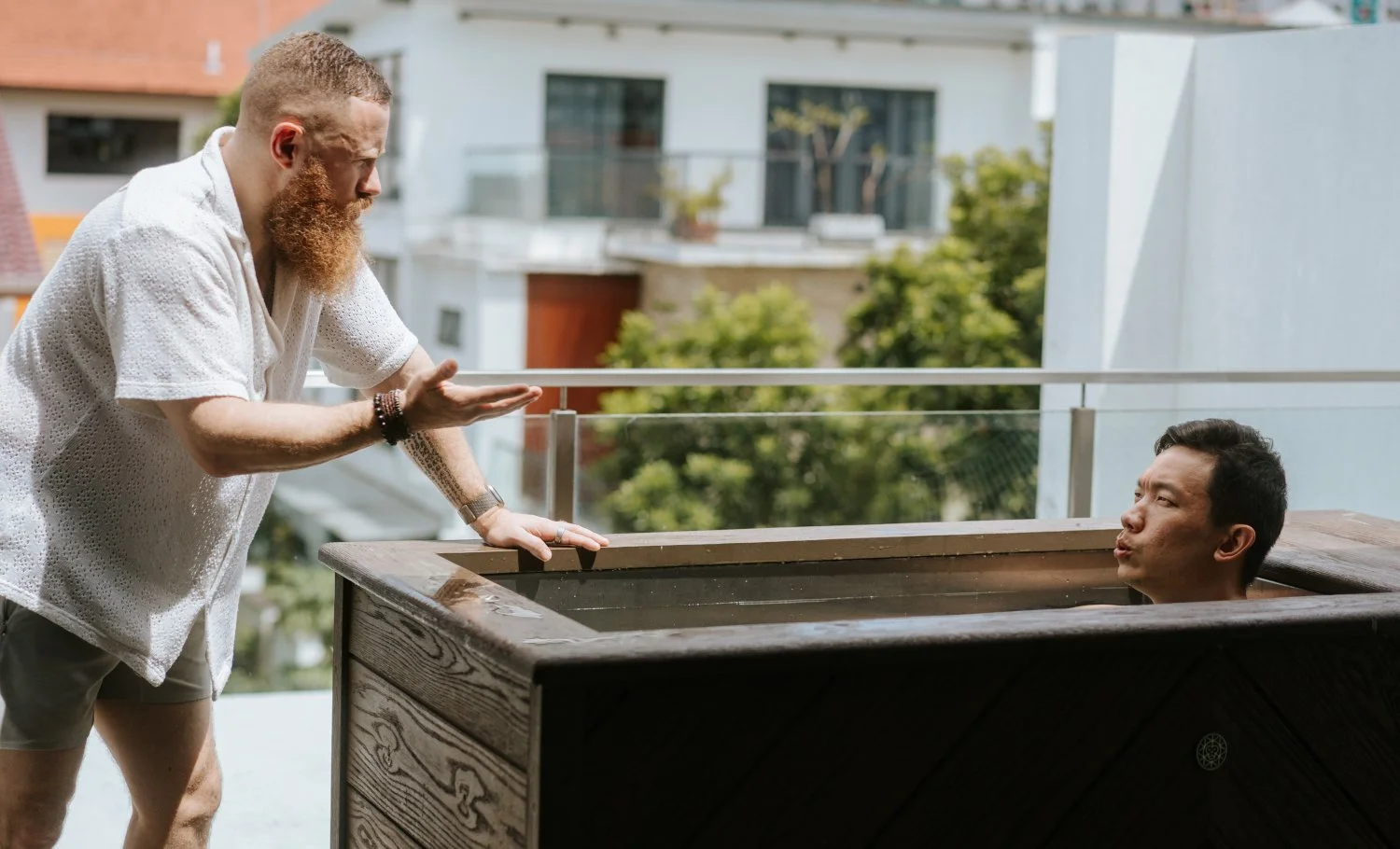
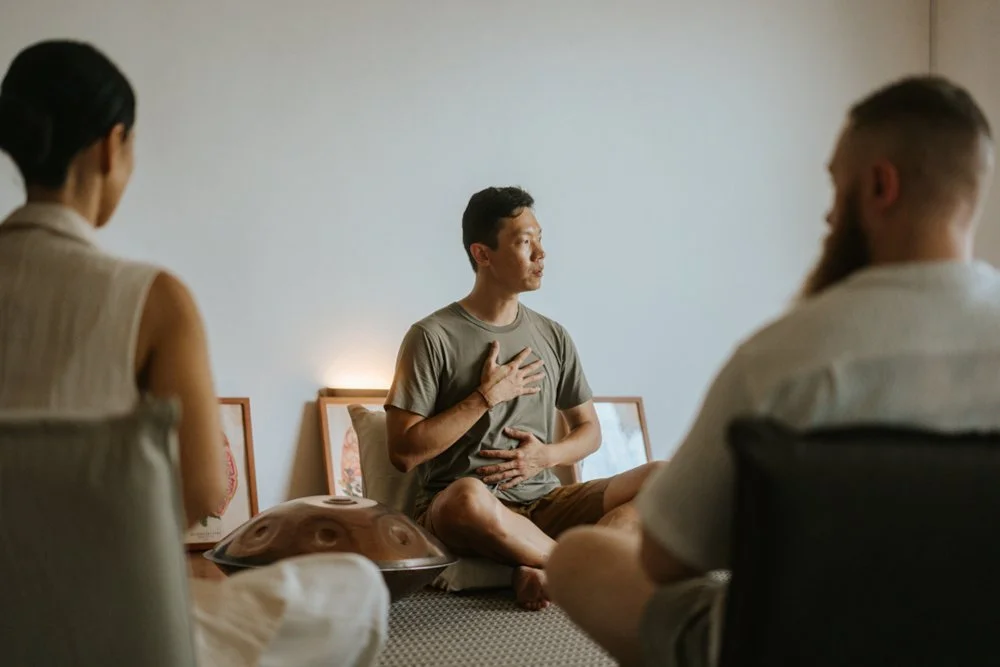
Program Overview
This program is designed to certify participants in the safe and effective facilitation of guided breathwork and cold exposure sessions. This training focuses on the physiological understanding and practical execution necessary to lead transformative sessions.
Objectives and Outcomes
Upon completion, trainees will be equipped with the skills and confidence to conduct breathwork and cold immersion sessions for both individuals and groups based on four key competencies:
Physiological Understanding | Safety | Practical Facilitation | Resilience Coaching
Who is it for?
Aspiring facilitators
Seeking the foundational knowledge and skills needed to conduct safe and effective sessions.
Wellness practitioners
Seeking to deepen their holistic practice and improve client outcomes.
Fitness trainers & 'biohackers'
Aiming to integrate effective physiological recovery and stress management into training plans.
Mental health practitioners
Seeking to ground clients and teach active regulation techniques outside of talk therapy.
Parents and teachers
Looking for practical, accessible tools to manage high-stress environments (both home and classroom).
Executive Coaches
Integrating breath and cold exposure to enhance client performance and emotional regulation.
Course Structure
The full course is structured across four modules, delivered over four dedicated days.
Module 1 — Basic
The Foundation: Basic Breathwork
3 hours
Essential breathwork physiology, nervous-system regulation, and safe facilitation of basic breathwork techniques.
What you’ll gain:
Confidence to lead foundational breathwork sessions and support clients in safely regulating breathing and stress.
Biochemistry of Breath
The science of CO₂ tolerance, oxygen saturation and the important role of carbon dioxide.
Nervous System Management
Understanding the Sympathetic and Parasympathetic balance.
Basic Breathing Activation Techniques
Learn how to coach students to consciously regulate the autonomic nervous system: activating the parasympathetic system for deep relaxation and the sympathetic system for immediate focus and energy.
Safety
Safety considerations during breathwork, including understanding contraindications for certain medical conditions and how to manage sensations like dizziness or tingling.
Module 2 — Basic
The Plunge: Basic Ice Bath
3 hours
The science of cold, safe entry/exit protocols, and mind-body preparation before a plunge.
What you’ll gain:
Ability to guide safe, basic ice-bath sessions; understand risk and manage participants’ comfort and response.
The Science
Learn to explain the science and benefits of cold exposure, and what happens to the body when it enters cold water.
Overcoming the 'Flight' Response
Understanding how the body jumps into survival mode in a stressful situation and how to override this natural response.
Pre-Ice Prep
Preparing the participant’s mind, body and environment before an ice bath.
Identify Distress Signals
Learn to identify subtle physical and verbal reactions to know when to pull a participant out of the water.
Safety
Temperature management of water. Proper entry and exit protocols. How to prevent afterdrop after exiting cold water. Review of common risks (hypoxia, fainting, hypothermia) and immediate response protocols.
Module 3 — Advanced
Deep States: Advanced Breathwork
Module 1 is a pre-requisite
3 hours
Dive deeper into power breathing, physiological resilience, and advanced breathwork techniques for stronger nervous-system effects.
What you’ll gain:
Competence to guide advanced breathwork sessions and support clients through deeper mind-body shifts.
The Physiology of Resilience
A deep dive into the biological impact of extreme environmental training. We go beyond the basics to study the effects of endotoxins on inflammatory responses and how cold exposure creates hormetic stress to upgrade the nervous system.
Mindset & Commitment
You will learn to teach the "Self-Development Concept" — the understanding that true learning only begins at the threshold of hardship — and how to shift clients from a "Fixed Theory" to an "Incremental (Growth) Theory" of outcome expectancy.
Conscious & Power Breathing
Learn how to cue "Conscious Breathing." Special focus is placed on "Power Breathing" and learning what safety signals to look for in students to prevent hyperventilation issues while maximizing energy.
Meditative Integration
Rest is as important as the work. Learn various methodologies to guide students into deep meditative rest, integrating the high-energy release of breathwork into a grounded state of calm.
Module 4 — Advanced
Ice Master: Advanced Ice Bath
Module 2 is a pre-requisite
3 hours
Extended cold exposure — mental prep, stress inoculation, thermal recovery, and safety for long-duration ice baths.
What you’ll gain:
Skill to safely lead high-intensity cold exposure sessions and help clients build resilience and endurance under pressure.
Pre-Framing
Preparation begins before the ice. You will learn to lead the "Silent Barefoot Walk," a sensory technique to guide participants' focus inward, quieting the mind prior to tough mental challenges.
Fortitude Testing & Stress Inoculation
Before the cold, we train the mind to overwrite physical discomfort. Participants will be guided through endurance stress tests and static loading poses to break through mental barriers.
Extended Cold Exposure
The ultimate test of mind over matter. We aim for a 10-minute cold exposure window. You will learn how to coach students to maintain core heat and overwrite the panic response during the plunge.
Thermal Recovery & Brown Fat Activation
The most critical phase for a guide. Learn how to instruct "Brown Fat Activation" (BAT) warming techniques immediately post-plunge.
Safety
Learn the safety protocols for Advanced ice baths and how and why they differ from Basic ice baths.
Your Instructor
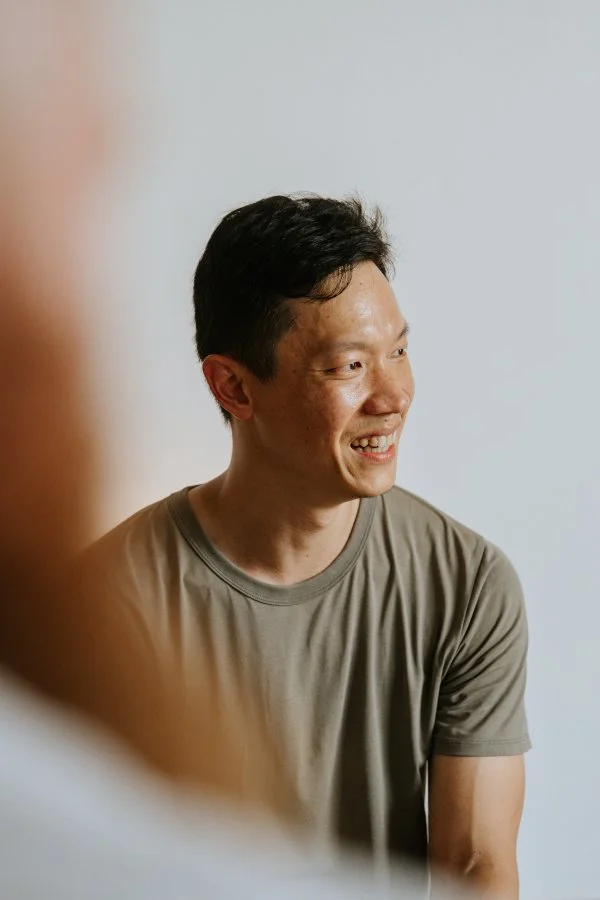
Meet your instructor, Chun.
Chun is recognized as a pioneer in the breath and cold exposure space in Singapore.
Since 2019, he has been sharing the profound benefits of the practice and has guided thousands of people through transformative breath and cold experiences.
Chun holds official certification in multiple advanced modalities, including the Wim Hof Method and Oxygen Advantage. This diverse training ensures the program is built on a comprehensive, scientifically robust foundation.
A WORD FROM CHUN
Why being a trained facilitator is important
The sudden popularity of ice baths in Singapore has exposed a dangerous lack of expertise in safe cold exposure facilitation and safety protocols.
Facilities are providing the hardware (the ice) without the software (the skilled guidance). The prevailing myth among enthusiasts is that you must grit your teeth and stay in the freezing water as long as possible to "win."
This ego-driven approach is false. Colder is not always better. Longer is not always stronger.
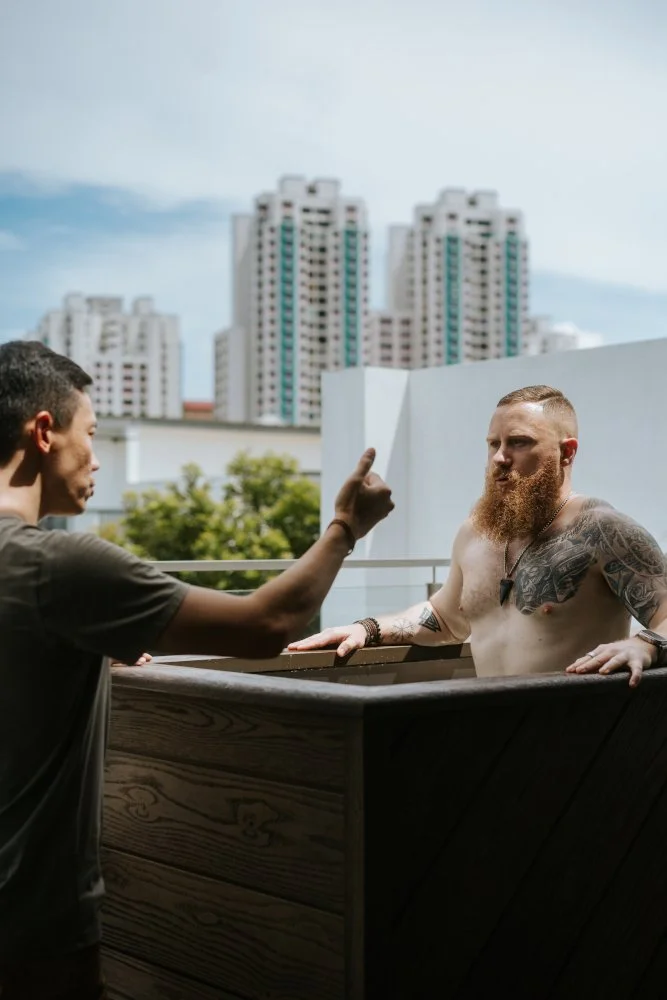
I know this trap because early in my own training, my ego pushed me into extreme, uncontrolled shivering just to prove I could "handle it". I have witnessed participants in Singapore suffer panic attacks and temporary memory loss because their bodies found the thermal shock too stressful. This shock leads to afterdrop (the continued decrease in the core body temperature even though the body is no longer in the cold environment). Afterdrop is a clear sign of thermal trauma, and it is dangerous. This is merely survival, not mastery, and it risks turning people away from a powerful healing modality.
My goal is to close the dangerous expertise gap in Singapore by training facilitators who prioritize safety and guarantee a positive outcome in every ice bath session.
As a facilitator, you will possess the ability to transform a potentially high-risk environment into a safe, therapeutic space. We teach that effective physiological change is based on precision, not duration. Profound work is often completed in as little as 60–90 seconds.
You will learn to identify subtle physical and verbal reactions. You will know precisely when a participant has adapted well, and crucially, when they are in distress.
You will be the leader who guarantees a healthy, positive outcome every time.
Book your slot
Full weekend program 2 x $750 = $1500
Purchase the 2-day package for 10% off and use the code to book your classes below.