
We added MitoQ to the Homing Inn shop. Here’s how the science convinced us.
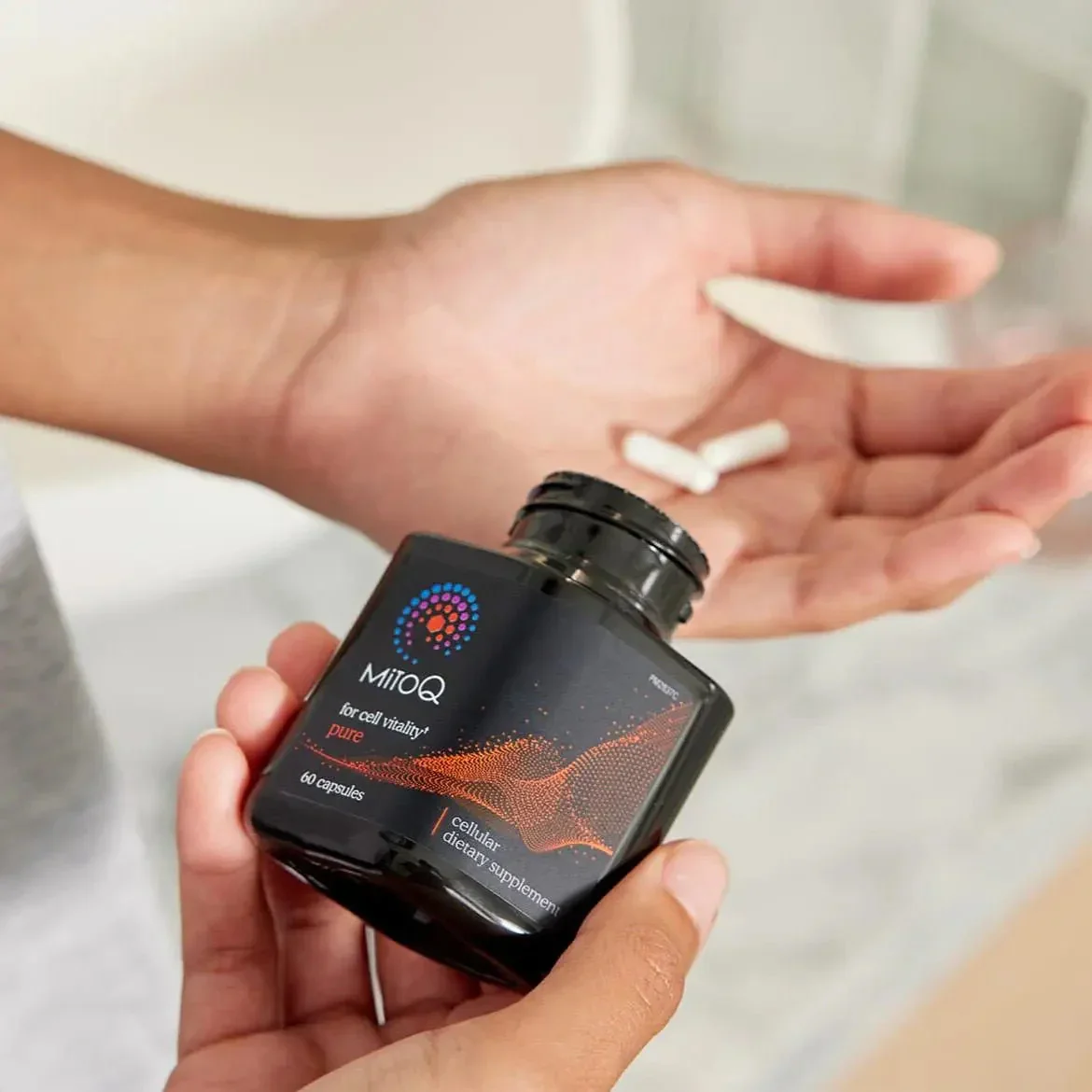
If you've spent any time at our studio, you know we don't sell things we haven't looked into properly. So when we decided to stock MitoQ, it wasn't because of the branding or the marketing. It was because of the research.
Here's what we found, why it matters, and how it connects to everything we do at Homing Inn.
The problem with how our cells age
Every cell in your body produces energy through structures called mitochondria. They convert what you eat and breathe into ATP, the molecule your brain, heart, and muscles all depend on to function.
During that energy production process, byproducts called reactive oxygen species (ROS) are generated. In small amounts, ROS are actually useful. They play a role in immune response and cellular signalling. But as we age, or when we're under sustained stress, poor sleep, environmental toxins, or heavy training loads, ROS production starts to outpace the body's ability to neutralise it. (Source: Coenzyme Q10 Analogues: Benefits and Challenges for Therapeutics, PMC)
That imbalance damages the membranes, proteins, and DNA inside the mitochondria themselves. The result is a gradual decline in how much energy your cells can produce. You feel it as brain fog, persistent fatigue, slower recovery, and the general sense that your body just doesn't bounce back the way it used to.
Why regular CoQ10 doesn't fix it
Coenzyme Q10 is a naturally occurring molecule that plays a critical role in mitochondrial energy production and also acts as an antioxidant. Supplementing with it makes sense in theory. The problem is delivery.
Standard CoQ10 is a large, fat soluble molecule. It needs dietary fat to be absorbed, it enters the body slowly through the lymphatic system, and even once it reaches your cells, it faces its biggest obstacle: the inner mitochondrial membrane is virtually impermeable to it. (Source: Bioavailability of Coenzyme Q10, PMC)
Only a tiny fraction of the CoQ10 you swallow ever reaches the mitochondrial matrix, which is precisely where the damage is happening. This is why decades of large scale trials using standard antioxidant supplements have consistently failed to show meaningful results for conditions rooted in mitochondrial oxidative stress. (Source: Longevity.Technology MitoQ Review)
And if you've been paying extra for ubiquinol (the "active" form of CoQ10), the science is worth knowing. Your body naturally converts between ubiquinone and ubiquinol hundreds of times per hour. The premium you're paying for pre reduced CoQ10 doesn't meaningfully change the outcome. (Source: MitoQ CoQ10 Comparison)
What makes MitoQ different
MitoQ was developed over 30 years of research, originally at the University of Otago in New Zealand and later refined at the University of Cambridge. The molecule was engineered by Professor Mike Murphy, one of the world's leading authorities on mitochondrial biology. (Source: MitoQ Science Expert Panel)
The key innovation is structural. MitoQ attaches the active antioxidant component of CoQ10 to a positively charged molecule called a triphenylphosphonium (TPP) cation. Because the interior of your mitochondria carries a strong negative electrical charge (generated by the energy production process itself), the positively charged MitoQ molecule is actively pulled inside. (Source: PMC, Targeted Anti‐oxidant MitoQ)
This is not passive diffusion. It's active, electrically driven delivery. The result is that MitoQ accumulates inside the mitochondria at concentrations estimated to be hundreds to a thousand times greater than standard CoQ10. (Source: MitoQ Global)
Once inside, it gets recycled continuously by the electron transport chain, so it keeps working without being used up. A 10mg dose of MitoQ achieves what 200mg of standard CoQ10 cannot.
What the clinical trials actually show
This is where MitoQ separates itself from most supplements on the market. The research base is substantial: over 900 peer reviewed papers, 29 registered human clinical trials, and more than $60 million in independent funding. (Source: MitoQ Global)
Here are the standout findings.
Cardiovascular function
A landmark randomised, placebo controlled crossover trial led by Professor Doug Seals at the University of Colorado Boulder found that 20mg of MitoQ daily for six weeks produced a 42% improvement in brachial artery flow mediated dilation. That's the gold standard measure of arterial health and a reliable predictor of cardiovascular disease risk. The researchers noted this was equivalent to reversing approximately 15 to 20 years of age related vascular decline. (Source: Hypertension, American Heart Association)
The same research showed a 13% reduction in oxidised LDL cholesterol and measurable improvements in overall arterial flexibility. (Source: MitoQ Global)
Exercise performance and DNA protection
A study published in REDOX Biology showed that three weeks of 20mg daily MitoQ supplementation significantly reduced both nuclear and mitochondrial DNA damage in healthy young men following high intensity cycling. (Source: MitoQ Global)
In trained middle aged cyclists, four weeks of MitoQ resulted in a 10.8 second improvement in 8km time trial performance and a 10 watt increase in peak power output. (Source: MitoQ Global)
Separately, a short 10 day supplementation period was shown to elevate PGC1α expression in skeletal muscle. PGC1α is the master regulator of mitochondrial biogenesis, meaning MitoQ doesn't just protect existing mitochondria. It supports the creation of new ones. (Source: MitoQ Global)
Internal antioxidant production
Clinical evaluations found that MitoQ increased the body's own catalase production by 36%. Standard CoQ10 did not trigger this response at all. This is significant because it means MitoQ doesn't just neutralise free radicals directly. It upregulates your body's own defence systems. (Source: MitoQ Global)
Metabolic and liver health
A comprehensive 2025 scoping review published in Frontiers in Cardiovascular Medicine concluded that MitoQ offers a broad spectrum of metabolic benefits, including support for insulin sensitivity, reduction in liver fat accumulation, and protection against the cellular stress associated with high fat diets and metabolic dysfunction. (Source: Frontiers in Cardiovascular Medicine)
What it doesn't do (and why that matters)
One of the things that gave us more confidence in MitoQ, not less, is the research showing where it doesn't have an effect.
A study comparing MitoQ to standard CoQ10 in healthy middle aged men found that neither supplement altered baseline mitochondrial respiration or mitochondrial density in the absence of stress. (Source: PubMed)
What this means is that MitoQ acts as a shield and a restorative agent, not a stimulant. It doesn't artificially force your mitochondria to work harder. It protects them from damage and supports their function when they're under load. That's a very different proposition from a caffeine pill or a pre workout, and in our view, a much more honest one.
The kidney safety question
If you've done your own research, you may have come across a 2018 laboratory study that raised concerns about potential kidney toxicity. Here's the full picture.
That study exposed isolated kidney cells directly to MitoQ in concentrations far exceeding anything achievable through normal oral supplementation. The results could not be replicated in actual human physiology. (Source: PMC, Targeted Anti‐oxidant MitoQ and Kidney Tissue)
In 2022, a randomised crossover trial published in The FASEB Journal tested this directly. Researchers gave healthy adults 160mg of MitoQ in a single dose, eight times the recommended amount. The result: zero markers of acute kidney injury. No nephrotoxic effects whatsoever. (Source: PMC, Acute High Dose MitoQ)
Over 25 independent studies monitoring renal outcomes in human subjects confirm that MitoQ at normal doses (10 to 20mg daily) is safe, non toxic, and potentially supportive of long term kidney health. (Source: MitoQ Misconceptions)
What to expect and how long it takes
MitoQ is not something you'll feel on day one. It works at the cellular level, repairing and protecting infrastructure that took years to degrade. The published trials consistently show measurable physiological changes (improved arterial function, reduced DNA damage) within four to six weeks. (Source: MitoQ Global)
The subjective experience most people report, sustained energy without crashes, clearer thinking, noticeably faster recovery, tends to stabilise around the 90 day mark.
Our recommendation: commit to 90 days before judging whether it's working. The biology is doing its job long before you consciously feel the difference.
Why we chose to carry it
At Homing Inn, everything we do starts with the same principle: fix the biology first. Breathwork regulates your nervous system. Cold exposure trains your stress response. Movement builds resilience. MitoQ addresses the layer beneath all of that, the cellular energy production that makes everything else possible.
It's not a magic pill. It's a tool, backed by three decades of research, that supports the foundation your body runs on.
